

You’re three days into a month-long work stay in Lisbon when your Airbnb WiFi dies. Your client call is in two hours. This is exactly when having a travel WiFi device matters — but which type actually works for people who move between countries regularly?
The travel WiFi device market has changed. Airport rental kiosks and expensive one-time purchases aren’t your only options anymore. If you’re working remotely while traveling, understanding what’s available (and what’s outdated) saves you both money and connectivity headaches.
What Actually Counts as a Travel WiFi Device
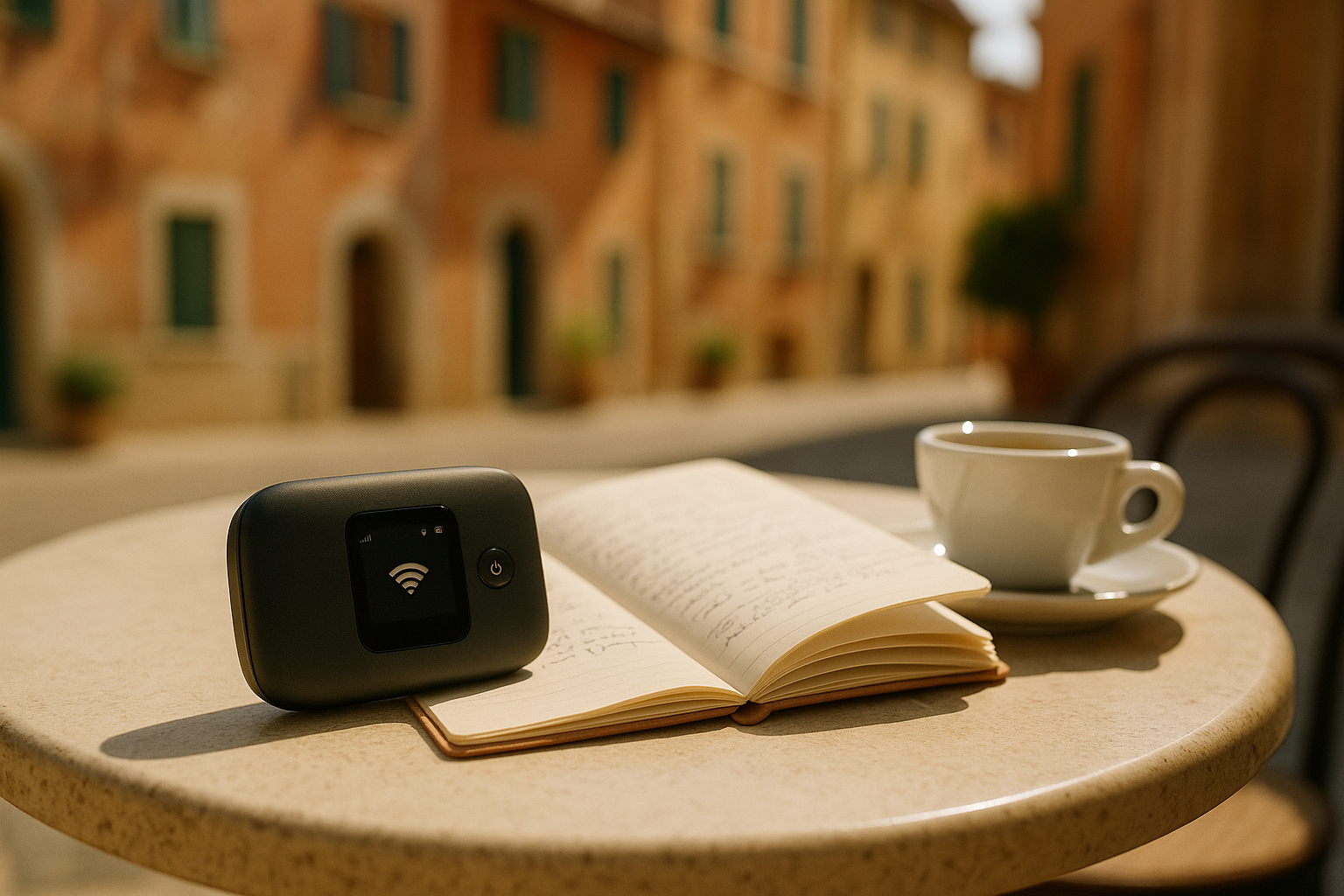
A travel WiFi device is a portable hotspot that creates a wireless internet connection you can share across multiple devices. Unlike your phone’s hotspot, these dedicated devices have longer battery life, stronger signals, and don’t drain your phone’s battery during a full workday.
The category includes several options: single-country pocket WiFi units you rent at airports, global-capable devices you buy outright, and newer subscription-based portable WiFi that works across multiple countries. Each fits different travel patterns.
Here’s what matters: battery life (8+ hours for a full workday), number of simultaneous connections (at least 5 if you share with a partner), weight (under 200g), and whether it locks you into one country or region.
How Portable WiFi Compares to Your Other Options
Before committing to any single solution, it helps to see how a travel WiFi device stacks up against the alternatives you’re already considering:
| Option | Setup Time | Multi-Country Use | Monthly Flexibility | Best For |
|---|---|---|---|---|
| Home Carrier Roaming | Instant | Yes, expensive | Fixed contract | Short trips only |
| Local SIM Cards | 1-3 hours per country | No, new SIM each time | Varies by country | Long stays in one place |
| eSIM Plans | Minutes | Yes | Usually prepaid blocks | Phone-primary users |
| Airport WiFi Rentals | 30+ min queues | Single country | Daily rates add up | Week-long vacations |
| Subscription Portable WiFi | Ships before departure | Yes, 100+ countries | Monthly, cancel anytime | Multi-country digital nomads |
The Old Model: Airport Rentals and One-Time Purchases
Traditional travel WiFi devices came in two flavors, and both have serious drawbacks if you move countries frequently.
Airport rental kiosks charge daily rates that look reasonable (maybe $8-12 per day) until you realize a month costs more than a phone plan back home. You also queue at pickup counters, return the device before your flight, and pay penalties if you forget. Every new country means finding a new rental company.
Buying a global-capable device outright costs $150-300, then you still pay for data separately in each country. You’re responsible for firmware updates, finding compatible SIM cards, and troubleshooting connection issues with no support team. These devices also become paperweights when network technology changes.
Why Subscription Models Make More Sense for Regular Travelers
If you’re spending 3-6 months abroad (or longer), subscription-based connectivity changes the math entirely.
With a monthly subscription that includes portable WiFi as an option, you pay one predictable amount that works across countries. The device ships to you before departure, already configured and activated. You land, turn it on, and you’re connected at local rates without hunting for SIM cards or haggling at phone shops.
When you move from Portugal to Croatia to Greece, the same device keeps working. No new contracts, no local bank accounts needed, no foreign paperwork. If you’re staying put for a month, you can pause service. If your plans change and you head home early, you cancel without penalties or locked contracts.
ConnectPls built exactly this model. The subscription includes your choice of eSIM, physical SIM card, or portable WiFi device (or combine them) that works across 200+ countries. Monthly billing, local rates wherever you land, activated before you fly. You’re not locked into annual contracts or forced to buy data in bulk you might not use.
When You Actually Need the Physical Device
eSIM plans are lighter and simpler, so why carry a separate WiFi device? Because certain situations need it.
You’re sharing connectivity with a partner who also works remotely, and both of you need stable connections for video calls. Your laptop doesn’t have eSIM capability and you’re working from cafes with unreliable public WiFi. You’re in a country where your phone’s eSIM works but your tablet and laptop need connectivity too. The accommodation WiFi is genuinely terrible (common in cheaper Airbnbs and rural areas).
A portable WiFi device is your backup or primary connection depending on the day. The subscription model means you have it available when needed without paying daily rental rates or buying separate data in each country.
What to Look for in a Travel WiFi Subscription
Not all subscription services offer the same flexibility. Here’s what actually matters:
- True monthly billing — not “monthly” plans that require 3-12 month commitments upfront
- Multi-country coverage — if you’re paying monthly, it should work across regions without add-on fees
- Local rates — you should pay what locals pay, not tourist roaming surcharges
- Activated before departure — the device arrives ready to use the moment you land
- Pause and cancel flexibility — because travel plans change constantly
- Multiple connectivity options — ability to switch between eSIM, physical SIM, and portable WiFi as your needs change
The subscription should also include support in your language, not just local-language customer service that’s useless when you’re troubleshooting in a country where you don’t speak the language.
Making It Work with Your Other Devices
Most digital nomads carry at least three devices: phone, laptop, and either a tablet or second laptop. Your phone might handle eSIM perfectly, but your older laptop and tablet need traditional WiFi.
This is where having both eSIM and portable WiFi options in the same subscription makes sense. Use eSIM on your phone for calls and basic connectivity. Use the portable WiFi device for your laptop during work hours and your tablet in the evening. Or run them simultaneously for redundancy when you have critical deadlines.
The ability to switch between options monthly (or pause the portable device for a month when you don’t need it) gives you control over costs without sacrificing connectivity options.
Frequently Asked Questions
How long does a travel WiFi device battery actually last during real work?
Most decent portable WiFi devices claim 8-12 hours of battery life, but actual performance depends on how many devices you connect and signal strength. In practice, expect 6-8 hours of continuous use during active video calls and file uploads. Bring a small power bank for full-day sessions away from outlets, or look for subscriptions that include a device with replaceable batteries.
Can I use a travel WiFi device while moving between countries in the same week?
With subscription-based portable WiFi that covers multiple countries, yes. The device automatically connects to local networks as you cross borders. Traditional airport rentals only work in the country where you rented them. If you’re doing the classic Spain-to-Portugal-to-France route over two weeks, subscription devices save you from returning and re-renting at each stop.
Is a dedicated WiFi device better than just using my phone as a hotspot?
For occasional personal browsing, your phone’s hotspot works fine. For full workdays, a dedicated device has real advantages: longer battery life that doesn’t drain your phone, stronger signal range, ability to connect 5-10 devices simultaneously, and it keeps your phone free for calls and messages. If you’re working 6-8 hours daily from cafes or coworking spaces, the dedicated device pays for itself in productivity and convenience.
Stay connected from the moment you land
ConnectPls provides eSIM plans, SIM cards, and portable WiFi subscriptions for digital nomads across 200+ countries — activated before you fly, working the moment you land, at local rates with flexible monthly billing and no surprise bills.