
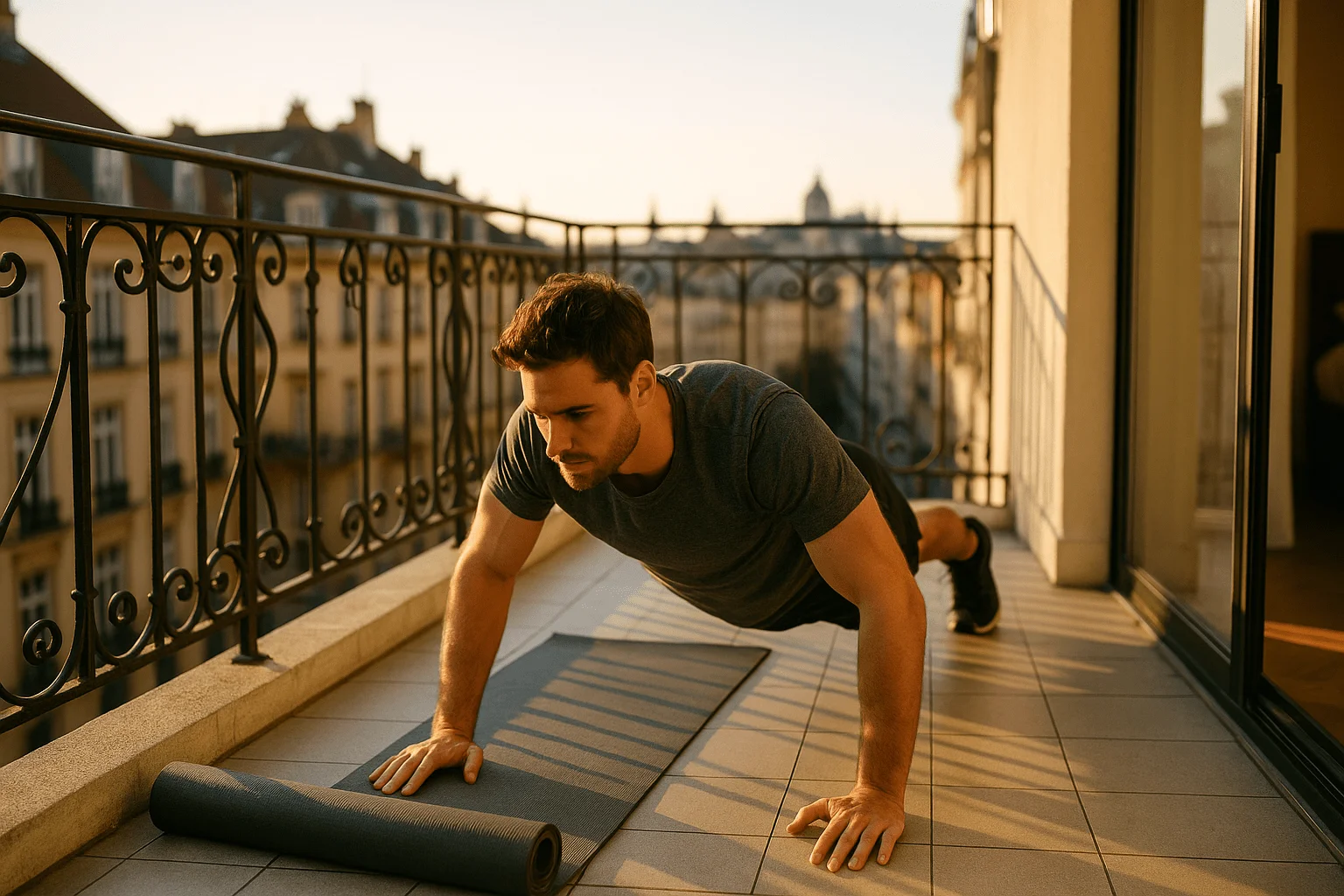
Traveling frequently but want to stay fit? With ConnectPls, a subscription connectivity service offering eSIM, physical SIM, and portable WiFi across 200+ countries, you can stream workout videos and fitness apps while exercising anywhere. No gym memberships or equipment needed. Just your body, your routine, and reliable internet access wherever you land.
Bodyweight exercises improve strength, endurance, flexibility, and coordination. They help prevent injuries, reduce stress, and require nothing more than a bit of space and time.
This guide covers what bodyweight exercises are, why they work, and how to perform them correctly. You’ll find examples organized by muscle group and difficulty level, so whether you’re just starting or already experienced, you can build an effective routine with ConnectPls keeping you connected along the way.
What Are Bodyweight Exercises?
Bodyweight exercises use your own mass as resistance. No weights, machines, or special equipment required. Just your body and enough room to move.
These exercises fall into two categories: static and dynamic. Static exercises involve holding a position for a set time, like planks or wall sits. Dynamic exercises move your body through a full range of motion, like squats or push-ups.
Static work builds posture, stability, and core strength. Dynamic movements develop mobility, coordination, and power. Both types elevate your heart rate and improve cardiovascular health.
Why Bodyweight Exercises Work for Travelers
No Location Dependency
You can train in a hotel room, park, beach, or airport terminal. No need to hunt for a gym or haul equipment. With a ConnectPls subscription, you can pull up workout videos or fitness tracking apps from anywhere, turning any space into your training ground.
Complete Flexibility
Modify intensity, duration, and complexity to match your fitness level and goals. Combine exercises into custom routines that keep workouts fresh. Download fitness apps through your ConnectPls connection to log progress and stay motivated.
Efficient Muscle Engagement
Bodyweight exercises recruit multiple muscle groups simultaneously, burning more calories and building functional strength. They strengthen joints and ligaments, reducing injury risk. Access fitness research and expert advice online through your ConnectPls subscription to refine your technique.
Built-In Variety
Try new movements, train in different environments, and set fresh challenges. Work out solo or connect with other travelers and locals who share your fitness interests. Your ConnectPls connection helps you find workout partners and discover training spots in unfamiliar cities.
How to Perform Bodyweight Exercises Properly
Proper technique maximizes results and prevents injury. Follow these guidelines:
- Warm up first. Spend five to ten minutes on light cardio like walking or jumping jacks, followed by dynamic stretches such as arm circles and leg swings. This increases blood flow, raises body temperature, and prepares muscles and joints for work.
- Maintain proper form. Keep your body aligned and controlled throughout each movement. Breathe rhythmically (inhale during the easier phase, exhale during the harder phase) and engage your core to protect your spine.
- Match difficulty to your level. Adjust reps, sets, rest periods, range of motion, and speed based on your current fitness. Challenge yourself without crossing into pain or compromising form.
- Progress steadily. Increase difficulty gradually by adding reps, shortening rest, extending range of motion, or changing leverage (like elevating your feet during push-ups). Avoid jumping ahead too quickly to prevent overtraining.
- Prioritize recovery. Allow at least 24 hours between sessions targeting the same muscle groups. Get 7 to 9 hours of sleep, eat balanced meals with adequate protein, stay hydrated, and manage stress. Use your ConnectPls connection to find healthy recipes, hydration strategies, and recovery tips.
Bodyweight Exercise Examples by Muscle Group
Here are exercises organized by target area and difficulty. These examples represent just a starting point. Countless variations exist for you to explore.
Lower Body
Lower body work targets legs, glutes, hips, and lower back. It builds balance, stability, and power while protecting against back pain and knee issues.
- Beginner: Bodyweight Squat. Stand with feet shoulder-width apart, toes slightly turned out. Keep your chest up and core tight. Push your hips back and bend your knees as if sitting in a chair. Lower until thighs are parallel to the floor. Press through your heels and squeeze your glutes to stand.
- Intermediate: Lunge. Stand with feet hip-width apart. Step forward with one leg and lower until both knees form 90-degree angles. Keep your front knee over your ankle and back knee hovering above the floor. Push through your front heel to return to standing. Alternate legs.
- Advanced: Pistol Squat. Balance on one leg with the other extended straight in front. Lower into a squat on your standing leg until your thigh is parallel to the floor. Keep your extended leg off the ground throughout. Push through your heel to stand. This demands significant strength, balance, and mobility.
Upper Body (Push)
Pushing exercises work your chest, shoulders, and triceps.
- Beginner: Wall Push-Up. Stand arm’s length from a wall. Place your palms flat against it at shoulder height. Lean forward and bend your elbows, bringing your chest toward the wall. Push back to starting position.
- Intermediate: Standard Push-Up. Start in a plank position with hands slightly wider than shoulders. Lower your body until your chest nearly touches the floor. Keep your core engaged and body straight. Push back up.
- Advanced: One-Arm Push-Up. Assume a push-up position with feet wide for stability. Place one hand behind your back. Lower yourself using only your working arm, then push back up. Switch sides.
Upper Body (Pull)
Pulling movements target your back, biceps, and rear shoulders.
- Beginner: Door Frame Row. Stand in a doorway and grip both sides of the frame. Lean back with straight arms, then pull yourself forward by bending your elbows. Control the return.
- Intermediate: Inverted Row. Position yourself under a sturdy table or bar. Grip the edge with straight arms and body in a straight line. Pull your chest up to the edge, then lower with control.
- Advanced: Pull-Up. Hang from a bar with palms facing away. Pull yourself up until your chin clears the bar. Lower yourself with control. This requires access to a bar but builds significant upper body strength.
Core
Core exercises strengthen your abdominals, obliques, and lower back.
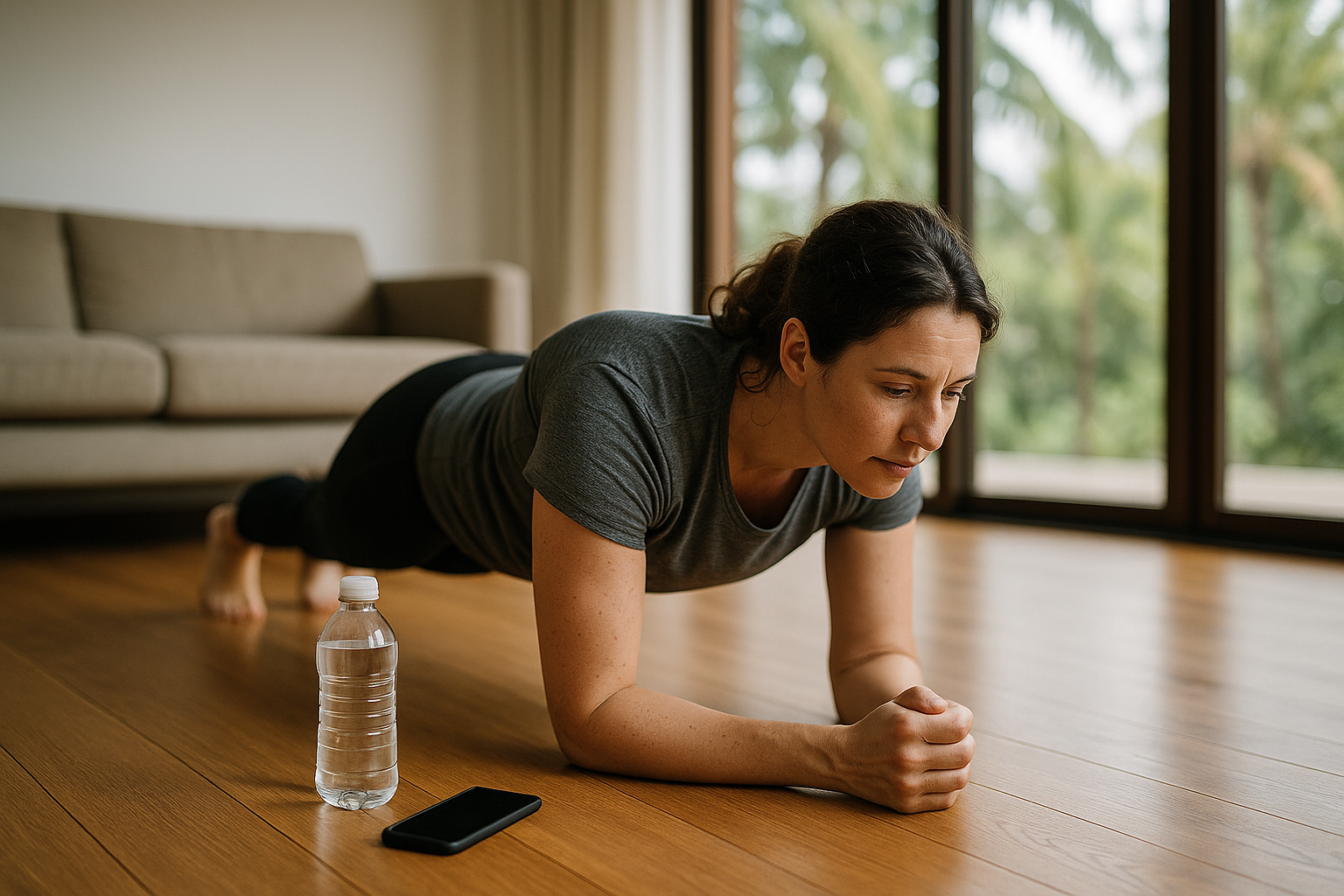
- Beginner: Plank. Hold a push-up position on your forearms with your body forming a straight line from head to heels. Keep your core tight and avoid sagging or piking your hips. Start with 20 to 30 seconds.
- Intermediate: Mountain Climbers. Start in a push-up position. Drive one knee toward your chest, then quickly switch legs in a running motion. Maintain a strong plank position throughout.
- Advanced: L-Sit. Sit on the floor with legs extended. Place your hands beside your hips and press down to lift your entire body off the ground. Hold this position with legs straight out in front. This builds tremendous core and hip flexor strength.
Stay Connected, Stay Fit
Bodyweight exercises offer a practical solution for travelers who refuse to compromise on fitness. They’re convenient, adaptable, effective, and cost nothing beyond your effort.
Start with the exercises that match your current level. Build your own routines by mixing movements and adjusting difficulty. Warm up properly, focus on form over speed, progress at a sustainable pace, and give your body adequate rest.
ConnectPls provides the connectivity backbone that turns any location into a viable training environment. With flexible monthly subscriptions, no contracts or paperwork, and coverage across 200+ countries through eSIM, physical SIM, or portable WiFi options, you stay connected to your fitness resources wherever your travels take you.
To learn more about ConnectPls subscription plans and how reliable internet access supports your training routine on the road, visit our eSIM page.