
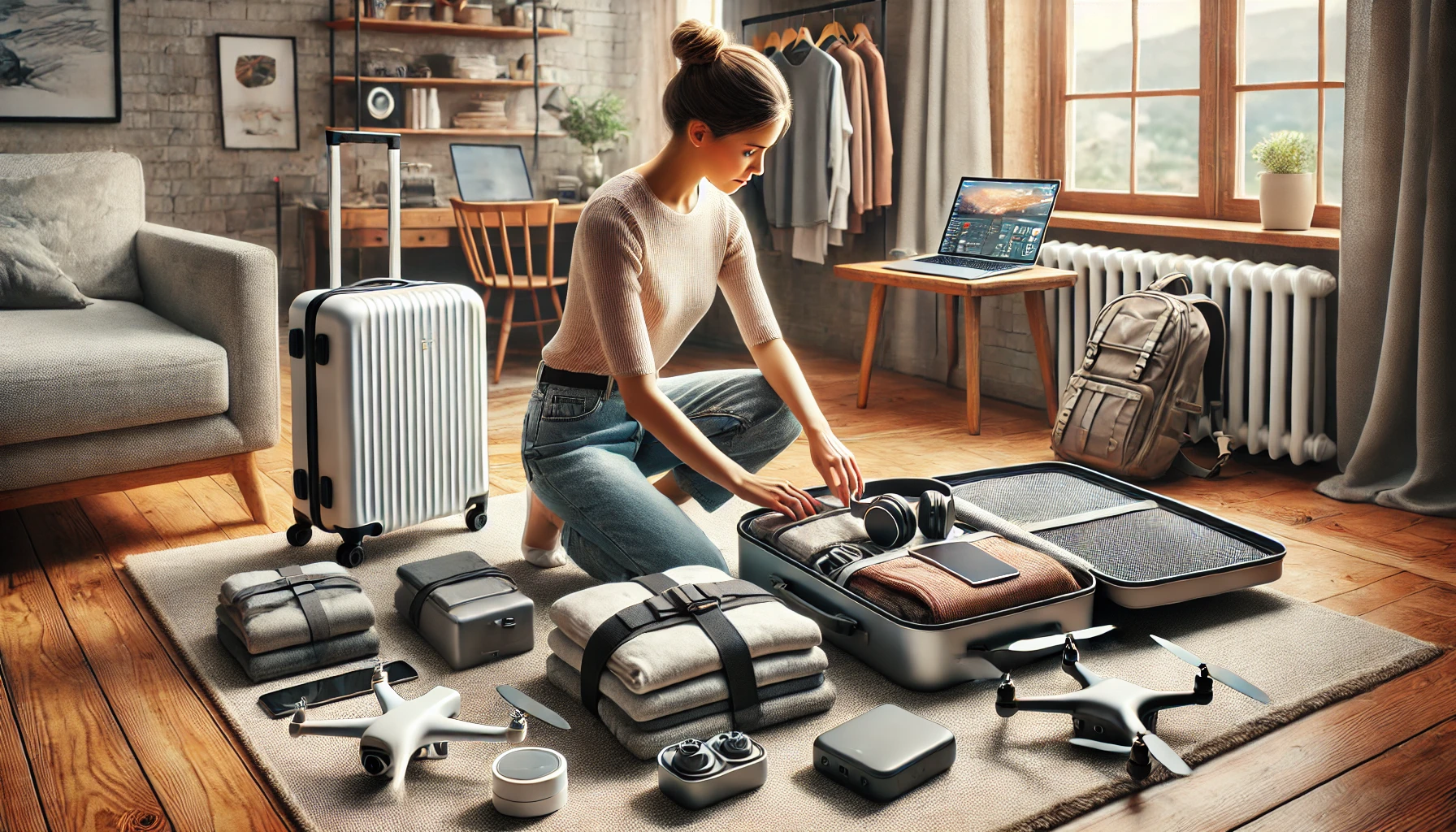
We’ve shipped thousands of mobile routers and SIM cards to digital nomads over the last few years. The packing questions we get asked most often aren’t about clothing or toiletries — everyone finds those lists online. They’re about connectivity gear, adapters, backup power, and the small failures that kill productivity when you’re working from a Lisbon café or a campsite in the French Alps.
This isn’t a generic packing checklist. It’s what we’ve learned watching real remote workers move between countries every month, what breaks or gets left behind, and where people overspend on gear they don’t need.
Start With Connectivity — It’s Your Lifeline, Not an Accessory
Most packing lists bury internet access under “electronics.” That’s backwards. Your ability to connect reliably is what makes nomad life possible. Pack for it first.
Portable WiFi vs eSIM vs Local SIMs: What Actually Works
You have four realistic options for staying online across multiple countries. Here’s how they compare when you’re moving every few weeks:
| Option | Best For | Downside | Monthly Cost Reality |
|---|---|---|---|
| Home carrier roaming | Short trips (1-2 weeks) | Expensive beyond first month; limited data | £10-15/day or capped bundles |
| Local SIM in each country | Staying 3+ months one place | Paperwork, local bank account often required, single-device only | Varies widely; admin hassle high |
| eSIM plans | Phone-only data, light users | Can’t share with laptop; country-by-country setup | £15-40/month depending on data cap |
| Portable WiFi subscription | Multi-device, frequent movers, van lifers | One more device to carry (small) | Predictable monthly billing; device included |
If you’re crossing borders regularly (say, Portugal to Spain to France over three months), the local SIM route burns time and often requires proof of address or a local bank account. Home carrier roaming adds up fast. Most digital nomads we support land on either a portable WiFi subscription or an eSIM, depending on how many devices they need online.
Why Portable WiFi Works for Multi-Country Nomads
A mobile router lets you connect your laptop, phone, tablet, and a travel partner’s devices (up to 10 at once) through one subscription. ConnectPls ships the device to you as part of the monthly plan. You don’t buy hardware upfront. It works across 160+ countries using Cloud SIM technology, which hops between local operators automatically, plus a backup physical SIM slot if you need it.
The Plus Europe package is truly unlimited (no throttling) across 70 countries including the UK, Ireland, France, Germany, Spain, Italy, Portugal, Netherlands, Nordics, Turkey, Canada, Mexico, Australia, and New Zealand. If you’re bouncing between those Group 0 countries, you activate the subscription for the months you travel and pause when you’re settled somewhere with fixed broadband. No contracts, and billing is monthly and flexible.
Delivery takes 2-3 working days in Europe, 4-5 in the UK, so you can start in one country and have it waiting at your next Airbnb. We see a lot of van lifers using this setup across France and Spain because motorhome broadband from local providers often requires a permanent address.
“ConnectPls has allowed us to work and travel across multiple countries. After trying several different providers over a year, we think it’s the best solution for digital nomads wanting to stay connected within Europe.”
— Jess & Marcus Woodbridge, verified ConnectPls customer
The Gear That Actually Matters (And What You Can Skip)
Power and Charging: Pack Redundancy, Not Quantity
Bring one good multi-port USB charger (GaN chargers are small and handle laptop + phone + router at once) and two charging cables for each critical device. Cables fray in bags. The second cable is your insurance.
A 10,000mAh power bank covers a day of coworking if the café outlet situation is bad. Bigger ones are heavy and you won’t carry them. Skip solar chargers unless you’re genuinely off-grid for days. They’re slow and bulky for the occasional campsite stay.
Adapters: One Universal, One Backup
A single universal travel adapter works in most countries. Carry a second cheap adapter for your most-visited region (e.g. EU two-pin if you’re based in Europe). Hotel adapters vanish, and the last thing you want is a dead laptop before a client call because the adaptor broke.
Laptop and Accessories: Less Is More
Your laptop is non-negotiable. A protective sleeve is worth the space. We’ve had customers file insurance claims after a laptop cracked in a backpack between countries. A lightweight external mouse makes long work sessions bearable; the trackpad gets old fast.
Skip the portable monitor unless your work genuinely requires dual screens. Most nomads who pack one use it twice and then leave it in storage. Same with mechanical keyboards. They’re heavy, and café tables are small.
Country-Specific Realities You Won’t Find on Generic Lists
Renting Pocket WiFi in Japan
Japan is one of the few countries where short-term pocket WiFi rental at the airport still makes sense for tourists staying under two weeks. Daily rates run about ¥500-900, and the devices are solid. But if you’re in Japan for a month or bouncing back, a subscription model is cheaper and you’re not managing returns. Japan falls into ConnectPls Group 1, which means 4G unlimited data, though speeds may slow after about 5GB in a day (which is a lot unless you’re uploading video).
Cheapest Pocket WiFi in Australia
Australia has expensive local SIM options and patchy coverage outside cities. Portable WiFi subscriptions avoid the Telstra/Optus paperwork and cover you in both metro areas and regional spots like Byron Bay or Tasmania. Australia is in Group 0, so truly unlimited data. If you’re in Australia for a few weeks then heading to New Zealand (also Group 0), one subscription follows you without setup.
Portable WiFi in Spain and France
These two countries see heavy nomad and van lifer traffic. Local SIMs (Orange, Movistar, Free) are good if you’re staying three months in one place and have a permanent address, but the sign-up friction is real. A portable WiFi subscription gives you the same local 4G speeds, works the day you land, and there’s no contract. We ship a lot of devices to people doing month-long road trips through Spain and southern France who don’t want to wrestle with French broadband providers from a campervan.
What to Leave Behind (Advice from People Who Overpacked)
- Five USB drives: Cloud storage is faster and you won’t lose it in a café. Keep one encrypted backup drive for critical files, that’s it.
- A full toiletries suitcase: You can buy shampoo in Portugal. Pack two weeks’ worth and restock locally.
- Excessive clothing: If you’re not wearing it in the first two weeks, you won’t wear it. Nomad life is laundromats, not fashion shows.
- Guidebooks: Your phone has better maps and updated information. One Lonely Planet weighs more than your power bank.
- A DSLR camera (unless it’s your job): Phone cameras are excellent now. The DSLR stays in the bag, then you leave it in storage.
The One Thing No Packing List Mentions: Shipping Logistics
If you’re moving between countries every month, plan how you’ll receive things. Some Airbnb hosts don’t accept parcels. Some countries (looking at you, Italy and Spain) have couriers that “attempt delivery” without ringing the bell.
When you order a portable WiFi device or a SIM card, give a reliable address. Your first accommodation with confirmed check-in, or a coworking space that holds packages. We deliver across Europe in 2-3 working days and to the UK in 4-5, but that’s only useful if someone’s there to receive it. Adding delivery instructions (“call on arrival” or “leave with neighbour”) saves a lot of redelivery hassle.
Frequently Asked Questions
Does portable WiFi work anywhere, or just certain countries?
It depends on the device and subscription. ConnectPls works in 160+ countries, but the service level varies. Group 0 countries (about 70, including most of Western Europe, the UK, Canada, Mexico, Australia, New Zealand) get truly unlimited 4G with no throttling. Group 1 countries like Japan, Singapore, Thailand, and the UAE have 4G unlimited data but may slow after roughly 5GB in a day. Group 2 (Brazil, Egypt, Morocco, for example) gives 500MB/day at 4G, then drops to 256kbps. Check your specific destinations before you assume “works everywhere” means the same speed everywhere.
How much does portable WiFi actually cost per month?
Rental models charge per day (often £5-10/day, so £150-300/month if you keep it). Subscription models are cheaper for nomads because you’re billed monthly, not daily, and the device is included in the plan rather than a separate purchase. There’s no hardware outlay. Monthly subscriptions also let you pause service when you’re somewhere with fixed broadband, which daily rentals don’t. If you’re moving across countries for three months, a subscription is the better deal.
What’s the cheapest WiFi option for France if I’m staying a few months?
If you have a permanent French address and a local bank account, a Free or Bouygues SIM is probably cheapest (around €20/month). If you don’t have those, or you’re in France for six weeks then moving to Spain, a portable WiFi subscription avoids the paperwork and gives you coverage in both countries without restarting the process. France is in Group 0, so data is truly unlimited. Monthly plans have no commitment, so you cancel when you leave.
Stay connected from the moment you land
ConnectPls provides eSIM plans, SIM cards, and portable WiFi subscriptions for digital nomads across 200+ countries — activated before you fly, working the moment you land, at local rates with flexible monthly billing and no surprise bills.