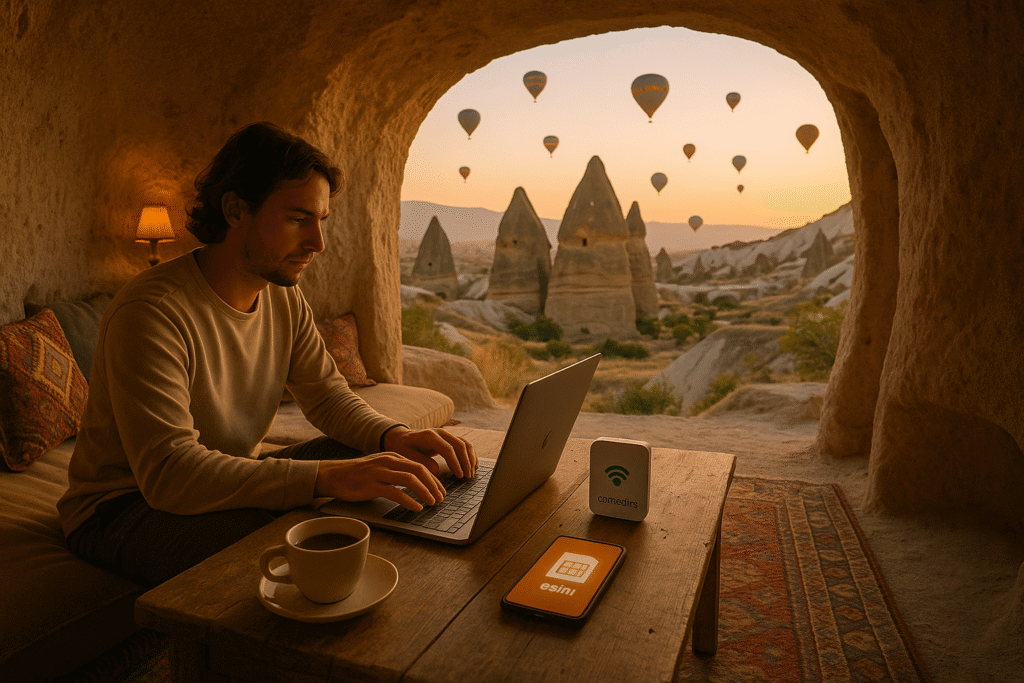
Dreaming of living in Cappadocia as a foreigner means imagining a life carved out of ancient rock, sharing your workspace with hot‑air balloons at sunrise, and calling rugged valleys home while still running your laptop and uploading content without interruption. But making that dream work takes more than a scenic photo—it requires real planning around accommodation, connectivity, practical living, and legal status. If you’re going to live in Cappadocia and build a life there, one foundational piece is staying connected: that’s where ConnectPls unlimited data WiFi and eSIM solutions become essential.
Key Takeaways
- Living in Cappadocia as a foreigner offers serenity, unique landscapes, lower rents and a slower pace—but it still demands infrastructure and readiness.
- Yes, people still live in cave houses, and some residences are near fairy chimneys; you can stay in a fairy chimney‑style home for a longer term if you find the right property.
- Public WiFi exists in cafés and hotels, but for reliable remote work you’ll want your own unlimited solution like ConnectPls.
- Alcohol is available in the tourist zones of Cappadocia, but local customs and regional norms need to be respected.
- For digital nomads, key attractions include natural scenery, local culture and coworking‑friendly environments; best times are spring and autumn when weather is mild.
- Turkey offers remote‑worker permit options; long‑term stay requires thinking about visa, residence permit, tax and local registration.
What Does Life Really Look Like in Cappadocia?
Do People Still Live in the Caves in Cappadocia?
Yes—they do. In Cappadocia, homes carved into volcanic rock formations still serve as everyday residences. Some locals live in modernised “cave houses” with insulation, heating and utilities, while the historic caves stand as a symbol of the region’s continuity. For foreigners considering living in Cappadocia as a foreigner, such homes bring character and history—but you’ll want to inspect plumbing, insulation (rock retains cold and heat differently) and access to reliable internet and power.
Do People Live in the Fairy Chimneys?
The fairy chimneys—those tall, slender cone‑shaped rock formations—are mythic symbols of the region. Living inside them full‑time is less common, but some have been adapted into lodging, guest houses or boutique homes. If you’re considering long‑term residence, you can find a property near or even within a converted fairy chimney—but the investment, zoning, comfort and amenities may differ from standard housing.
Can You Stay in a Fairy Chimney?
Yes, you absolutely can stay in a fairy chimney as a traveler or even arrange for longer term stays if you secure the right rental or property purchase. Many lodgings market “fairy chimney cave homes” and staying in one is a highlight. But living there long‑term as a foreigner requires checking utilities, accessibility, legal registration, and connectivity. If you’re living in Cappadocia as a foreigner and working remotely, that connectivity piece is crucial.
Accommodation Overview
Accommodation in Cappadocia spans from cave‑converted hotels and short‑stay rental units to long‑term apartments in towns like Göreme, Ürgüp or Nevşehir. For remote work and living, selecting a property near town hubs ensures better utilities and easier logistics. Prices vary with season and proximity to tourist hotspots. Off‑season and less tourist‑centric towns offer better value.
Connectivity & Remote Living: Can You Work from Cappadocia?
Is There WiFi in Cappadocia?
Yes, there is WiFi—but with caveats. Many cafés, hotels and guesthouses in Cappadocia provide public WiFi. But if you’re staying in a stone‑carved home or remote valley, signal strength may suffer, and internal network coverage can be unreliable due to thick rock walls. For anyone living in Cappadocia as a foreigner with a remote job, depending solely on hotel WiFi is risky.
Why Dedicated Connectivity Matters
When you base your life and work in Cappadocia, your internet connection becomes infrastructure—not an amenity. Delays in uploads, unpredictable bandwidth or poor signal at crucial moments can hinder business. That is why a dependable mobile data system is essential.
Ensure your remote work flows without interruption—use ConnectPls for unlimited data and mobile WiFi coverage wherever you roam in Cappadocia.
ConnectPls: Best Internet Solution for van‑lifers, nomads & expats
ConnectPls offers unlimited mobile data, eSIM or mobile router options tailored for digital nomads, van lifers, long‑term travellers, expats and migrants.
- Truly unlimited data, no throttles.
- Portable hotspot or eSIM on your device.
- Coverage even in less‑connected zones.
This means whether you’re working from a valley, a terrace above fairy chimneys or driving around in a van through Cappadocia, your internet stays strong.
Make your move to Cappadocia with confidence—Get ConnectPls unlimited mobile WiFi and stay connected every day.
Practical Connectivity Tips
- Prioritise accommodation in towns known for stronger services (Göreme, Ürgüp, Avanos).
- Carry a mobile router or eSIM as backup—especially if your primary lodging has patchy WiFi.
- Test signal strength in your actual workspace (terrace, dining table, van).
- If you live in a van or mobile setup around Cappadocia, ensure battery backups and hotspot redundancy.
- Don’t rely on public WiFi—equip yourself with ConnectPls and stay online while you live in Cappadocia.
Workspaces, Lifestyle & Enjoying Cappadocia
Key Attractions for a Digital Nomad Living in Cappadocia
Living in Cappadocia as a foreigner means your “commute” may include hot‑air balloon rides or sunrise views. Key attractions:
- The famous hot‑air balloon panoramas over fairy chimneys at dawn.
- Exploring valleys like Love, Rose and Red, carved into soft rock.
- Historic cave churches and underground cities—unique weekend adventures.
- Pottery workshops in Avanos, wine tasting in local cellars, and authentic Turkish breakfasts.
These experiences combine beautifully with remote work to create a rich lifestyle backdrop.
Workspaces in Cappadocia
While Cappadocia doesn’t yet have dozens of large coworking hubs, it does offer cafés, boutique hotels and shared workspaces where remote workers gather. To work productively:
- Choose accommodations with strong WiFi in public areas and ask about in‑room signal.
- Use terrace‑style cafés with natural light and reliable power.
- Create a “routine” where you shift venues day‑to‑day for inspiration.
For foreigners living in Cappadocia, one smart investment is obtaining your own portable hotspot via ConnectPls—giving you freedom to work from anywhere: countryside, van or valley lookout.
Weather, Seasons & Best Time to Live in Cappadocia
Cappadocia’s climate is continental: hot summers, cold winters, and transitional spring/autumn seasons that many find ideal.
When to Visit vs Long‑Term Stay
- Summer (June to August): Hot and dry, tourist peak, higher accommodation costs.
- Winter (December to February): Cold and occasionally snowy; good value but some tourist services slow.
- Spring (April–May) & Autumn (September–October): Mild weather, fewer crowds—excellent for living and working.
If you’re planning on living in Cappadocia as a foreigner and working remotely, arriving in spring or autumn is wise—ease into local life while conditions are comfortable.
Seasonal Practicalities
- In summer you’ll likely see daily balloon flights and tourism bustle.
- In winter, some remote roads may be icy; ensure heating and remote connectivity are covered.
- Shoulder seasons allow better accommodation deals and locals are more reachable.
Regardless of season, ensure your lodging has either reliable heating or cooling, and your connectivity is independent of shared hotel WiFi.
Culture, Daily Life & Legalities
Cultural Experiences in Cappadocia
Living in Cappadocia presents deep cultural immersion:
- Explore cave churches and ancient carvings.
- Join local pottery sessions, wine tastings, culinary experiences.
- Walk markets, meet locals, and discover living traditions.
Can You Drink Alcohol in Cappadocia?
Yes, you can. Alcohol is available in tourist‑centric towns like Göreme and Ürgüp. Turkish wines from the Anatolian plateau are noteworthy. However, in certain rural villages or more conservative areas, public drinking may be restricted and local customs should be respected.
Is There a Digital Nomad Visa in Turkey?
Yes—Turkey offers a remote‑worker permit or “digital nomad visa” style residence permit for people working abroad. Requirements typically include proving income above a threshold, a six‑month valid passport and remote employment.
This makes Cappadocia accessible for foreigners who wish to live and work from there. When you’re planning living in Cappadocia as a foreigner, these legal statuses matter.
Registration & Daily Practicalities
- Secure a residence permit (ikamet) if staying long term, register with local migration offices.
- Cost of living in Cappadocia as an expat can be modest compared to major Turkish cities—especially if you rent outside peak tourist areas.
- Learn some Turkish, build local connections, and participate in the community for smooth integration.
How to Make Living in Cappadocia Work for You
Setup Checklist
- Choose home base: town centre vs countryside.
- Secure accommodation with strong signal and utilities.
- Invest in connectivity: portable hotspot or eSIM from ConnectPls.
- Establish a routine: work hours, local exploration, downtime in nature.
- Confirm legal status: tourist visa, residence permit, remote‑worker permit if applicable.
- Set budget: accommodation, food, transport, connectivity and occasional travel outside valley.
Why ConnectPls is Part of Your Day‑to‑Day
If you’re living in Cappadocia as a foreigner and working online, your internet connection is your lifeline. With ConnectPls, you get unlimited data and mobility. Whether you move from town to hills, from a café terrace to a van parked beside a valley, you stay online—no reliance on hotel WiFi, no stress about data caps or signal drops.
Final Thoughts
Living in Cappadocia as a foreigner brings a beautiful blend of rugged scenery, peaceful rhythm and digital freedom. But scenery alone doesn’t create a sustainable life—you need planning, connectivity and local understanding. When done right, you can make Cappadocia your remote office, your creative studio, your daily home. With the right tools, especially unlimited connectivity from ConnectPls, you’re not choosing between paradise and productivity—you’re choosing both.